
Long before Fuzzy Dragon looked toward the stars, I did the same.
My view came from engineering classrooms at the University of Alabama at Birmingham.
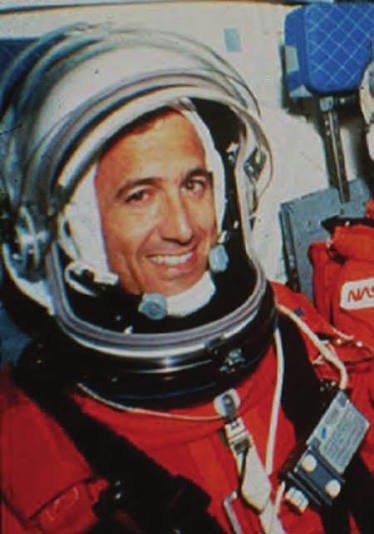
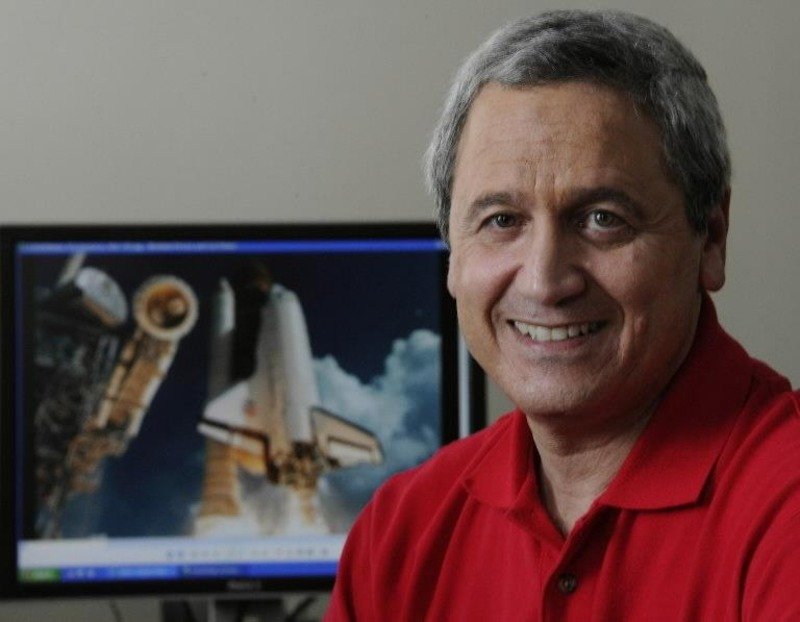
During those years, I watched Dr. Larry DeLucas journey into space.
His work reshaped how I understood astronauts and STEM careers.
Dr. DeLucas did not simply travel to orbit.
He carried science, leadership, and responsibility beyond Earth.
That example later became a quiet inspiration for Fuzzy Dragon Wonders.
Watching a Real Astronaut Change the Meaning of Possibility
As a UAB engineering student, I followed Dr. DeLucas’s spaceflight closely.
His mission showed that astronauts are more than explorers.
They are scientists, engineers, and collaborative problem solvers.
Dr. DeLucas flew aboard Space Shuttle Columbia on STS-50.
The mission ran from June 25 through July 9, 1992.
It supported the United States Microgravity Laboratory-1 program.
During the mission, he helped conduct more than 31 experiments.
These studies focused on materials processing and fluid physics.
One major area involved protein crystal growth in microgravity.
That research still supports medical science and drug development today.
It demonstrated how space science directly improves life on Earth.
This connection made astronauts feel like real-life superheroes.
From Space Science to Storytelling in Fuzzy Dragon Wonders
Years later, that inspiration surfaced naturally in Fuzzy Dragon Wonders.
Dr. DeLucas influenced how Fuzzy imagines being an astronaut.
The book treats space with wonder, curiosity, and realism.
When Fuzzy dreams of space travel, he imagines learning and service.
He wonders about studying planets and stars.
He imagines working at NASA and aboard the International Space Station.
These dreams reflect real responsibilities, not fantasy alone.
Astronauts train for years in science and engineering.
They master complex systems and advanced technology.
This approach grounds Fuzzy Dragon Wonders in authentic STEM thinking.
Children learn that curiosity connects directly to real-world impact.
Wonder becomes a starting point for meaningful learning.
Astronauts as Leaders, Scientists, and Everyday Heroes
Astronauts like Dr. DeLucas develop far more than technical knowledge.
They also cultivate leadership and teamwork skills.
They make decisions under pressure and listen carefully to others.
These qualities define effective STEM leadership.
They appear throughout Fuzzy Dragon’s journey.
They connect astronauts to scientists, engineers, and doctors.
Each role serves others through knowledge and problem-solving.
That service is central to the story’s message.
Helping others becomes the greatest superpower of all.
Teaching STEM Values to Children Ages 5–10
Fuzzy Dragon Wonders introduces STEM ideas to children ages 5–10.
It avoids overwhelming facts or complicated explanations.
Instead, it focuses on curiosity and helping others.
Children learn that STEM involves creativity and collaboration.
They see that leadership means asking thoughtful questions.
They learn to value different perspectives.
This approach supports early STEM confidence.
It also encourages children to imagine themselves as capable learners.
STEM becomes inviting rather than intimidating.
Seeing Space and Yourself as Full of Possibility
By the end of the story, Fuzzy reaches an important realization.
Superheroes are real, and they help others every day.
They may wear spacesuits, lab coats, or tool belts.
Dr. Larry DeLucas provided a real-world example of that truth.
Fuzzy Dragon reflects it through imagination and discovery.
Together, they invite children to see space differently.
They also invite children to see themselves differently.
Curiosity becomes a path toward service and leadership.
The stars become symbols of possibility within reach.